
Clinical trials are designed to test the safety and efficacy of new approaches to preventing, detecting, and treating disease. Clinical trials also look for new ways to use existing treatments, new drugs, surgical procedures and devices.
Participants in clinical trials with Macula Retina Vitreous Research Institute may sign up for screening to check if they are a candidate to receive the newest treatment for their vitreoretinal conditions. Patients involved in clinical research can benefit from additional care and attention from research staff, and will also help researchers find better treatments for future patients.
Active Enrolling Trials
Wet Age-Related Macular Degeneration (wAMD)
Adverum
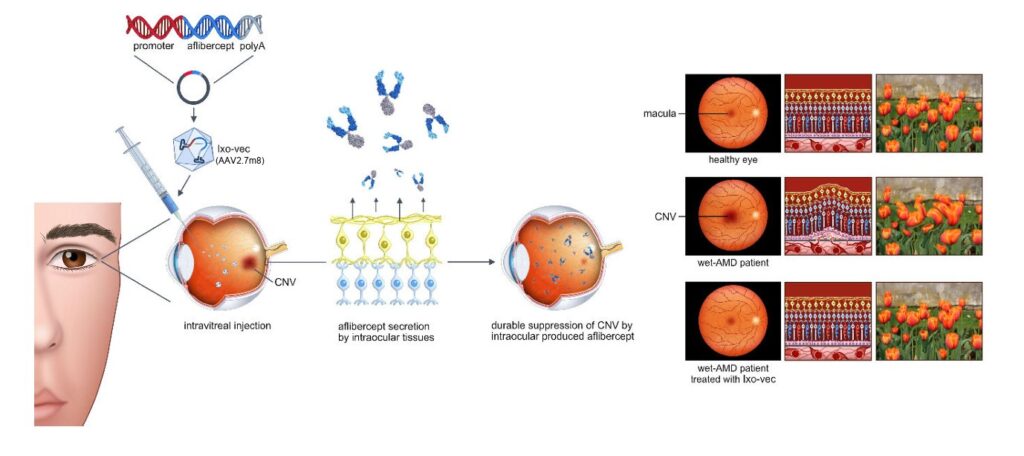
Adverum Biotechnologies is conducting the Phase 3 ARTEMIS, AQUARIUS, and Contralateral studies to evaluate the efficacy and safety of a single gene therapy injection as a potential alternative to the frequent, long-term injections currently required to treat neovascular (wet) age-related macular degeneration (nAMD). This multi-center, randomized, double-masked study will compare a single dose of ixoberogene soroparvovec (Ixo-vec) to the current standard-of-care, aflibercept, in participants aged 50 and older. By using a "biofactory" approach to provide continuous therapeutic levels of medication, this gene therapy aims to significantly reduce the long-term treatment burden for patients while maintaining or improving visual acuity. Although enrollment has closed for studies involving patients with one eye affected by wet AMD, patients with wet AMD in both eyes may still be eligible for a smaller contralateral-eye study that is currently being conducted.
AIV0007-E03-00 | Aiviva
This Phase 2 clinical trial is evaluating AIV007, an investigational periocular gel designed for the treatment of neovascular Age-Related Macular Degeneration (nAMD). Unlike current standard therapies like Eylea, which require frequent intravitreal injections directly into the eye , AIV007 is administered as a single injection into the area surrounding the eye (periocular). The AIV007 gel is thermoresponsive, meaning it transforms into a semisolid drug depot once injected, allowing for the slow, sustained release of medication over time. This innovative approach aims to reduce the "treatment burden" on patients by potentially extending the time between treatments to five months or longer. By minimizing the frequency of clinic visits and injections, this study explores whether AIV007 can maintain vision with less invasive and less frequent intervention compared to most patients’ 4-week regiment.
BELVEDERE | Genentech
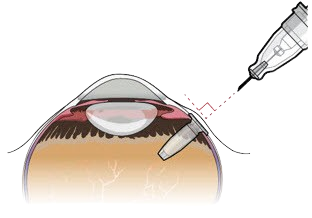
A Phase IV, Multicenter, Open-Label Study To Assess Corneal Endothelial Cells In Patients with Neovascular Age-Related Macular Degeneration Treated With The Port Delivery System With Ranibizumab (PDS)
Treatment for Wet AMD is highly effective but burdensome for patients who require injections as frequently as every four to eight weeks. In an effort to reduce this burden, Belvedere (a refillable eye implant) was designed to slowly release Lucentis over an extended period of time and only requires refills approximately every six months. This trial will assess changes in vision in patients who switched from previous intraocular injections to the Belvedere implant.
BURGUNDY | Genentech
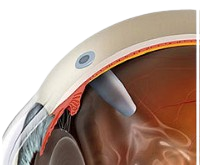
A Three Part, Phase I/II Study To Investigate The Safety, Tolerability, Pharmacokinetics, and Efficacy of Zifibancimig Following
Intravitreal Administration of Multiple Ascending Doses and Continuous Delivery From The Port Delivery In Patients With
Neovascular Age-Related Macular Degeneration
The refillable Port Delivery System is an ocular implant aimed at reducing the burden which nAMD patients face with frequent intravitreal injections. PDS + Lucentis has already shown to be an effective treatment for patients, however, this study will compare PDS + Lucentis to PDS + Zifibancimig at two doses. Zifibancimig is a novel therapeutic developed to inhibit both VEGF-A and Ang-2 with higher affinity and to optimize properties for a long duration of action. Angiopoietin-2 (Ang-2) acts as a vascular destabilization factor, is increased in patients with nAMD, and can be upregulated by VEGF-A. Regulating both VEGF-A and Ang-2 may further normalize the pathological ocular vasculature and provide a more sustained anti-leakage effect, allowing for less frequent dosing.
LUCIA | Eyepoint Pharmaceuticals
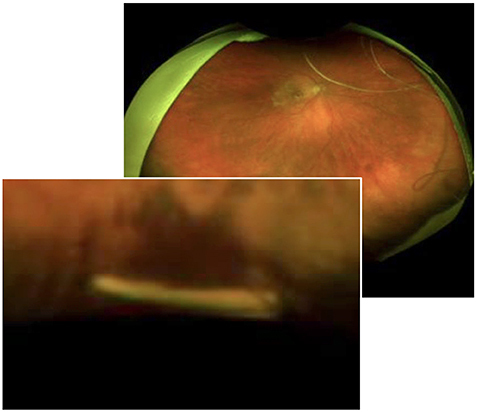
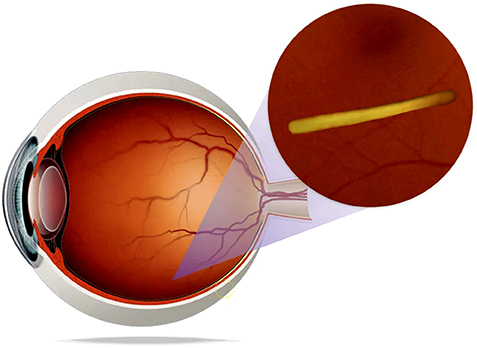
A Phase 3, Multicenter, Prospective, Randomized, Double-Masked, Parallel-Group Study of EYP-1901, a Tyrosine Kinase Inhibitor (TKI), Compared to Aflibercept in Subjects with Wet AMD
Despite the introduction of a number of improved anti-VEGF biologic agents in recent years, there remains a need for new therapies that will provide equivalent efficacy and anatomic disease control while reducing the need for frequent injections and the burden of mandatory monthly monitoring visits. EyePoint Pharmaceuticals has developed EYP-1901 IVT insert, a sustained and controlled delivery formulation of vorolanib, that releases drug over a period of approximately 6-9 months as a therapy to address this unmet medical need.
Geographic Atrophy (GA)
DFI18231 | Sanofi
A Multicenter, Randomized, Double-Masked, Placebo-Controlled Phase 3 Study of the Efficacy, Safety, and Tolerability of Subcutaneously Administered Pozelimab in Combination with Cemdisiran or Cemdisiran Alone in Patients with Geographic Atrophy Secondary to Age-related Macular Degeneration (AMD)
The purpose of this study is to test the safety and effectiveness of an experimental gene therapy called SAR446597. This gene therapy is designed to slow the progression of geographic atrophy (GA) secondary to age-related macular degeneration. Unlike current treatments that require monthly injections, this therapy involves a one-time injection into the study eye to deliver genes that block inflammation linked to GA lesion growth.
SIENNA | Regeneron

A Multicenter, Randomized, Double-Masked, Placebo-Controlled Phase 3 Study of the Efficacy, Safety, and Tolerability of Subcutaneously Administered Pozelimab in Combination with Cemdisiran or Cemdisiran Alone in Patients with Geographic Atrophy Secondary to Age-related Macular Degeneration (AMD)
This study aims to investigate subcutaneously injected complement C5 inhibition on the growth rate of GA lesions. Pozelimab is an IgG4 antibody, directed against C5 that blocks the formation of the Membrane Attack Complex and therefore mediates cell lysis. Cemdisiran is a livertargeted synthetic siRNA which degrades C5 mRNA and therefore reduces levels of circulating C5 protein. Combining these two agents may lead to a more effective and less burdensome dosing regimen for patients with geographic atrophy. Furthermore, subcutaneous administration may mitigate the need for frequent and bilateral injections.
Diabetic Macular Edema (DME)
Helios-3 | Ocular Therapeutix, Inc.
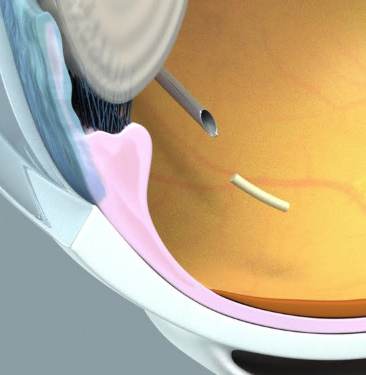
This Phase 3 clinical study evaluates the efficacy and safety of OTX-TKI, a long-acting intravitreal implant, in treating people with non-proliferative diabetic retinopathy (NPDR). The trial aims to determine if this sustained-release implant can improve the severity of the disease and prevent vision-threatening complications. Unlike current standard treatments that often require monthly injections, this implant is designed to slowly release medication over many months, potentially reducing the overall treatment burden and risks associated with frequent injections.
NAAVIGATE | AbbVie
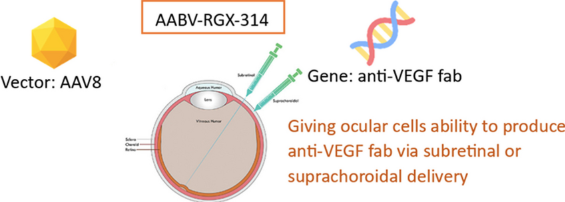
This research study is looking at a new way to help manage diabetic retinopathy, an eye condition caused by diabetes. The goal is to see if a one-time gene therapy injection of surabgene lomparvovec (sura-vec) can help prevent the progression of the disease and
worsening of vision. While many current treatments for this condition require injections into the eye or laser procedures, this study is testing if a single injection could provide long-term, continuous protection. The therapy uses a specialized viral vector to deliver a genetic "blueprint" to your eye cells, allowing them to naturally produce their own medicine that blocks a protein responsible for abnormal blood vessel growth and vision loss.
Macular Pucker
Protocol AM | NCT05145491
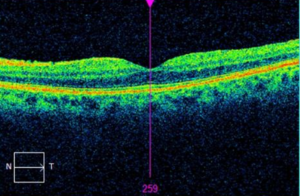
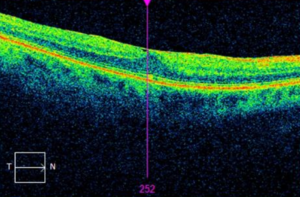
Randomized Trial Comparing Immediate vs. Deferred Surgery for Symptomatic Epiretinal Membranes (ERM)
Vitrectomy surgery to remove an epiretinal membrane (ERM) is one of the most common procedures performed by retinal specialists. Patients who present with significant macular changes on optical coherence tomography (OCT) but relatively good vision are often advised to defer surgery until vision declines to 20/40 or worse. However, it is unknown if delaying surgery results in worse visual acuity outcomes compared to immediate surgery. In addition, there is a need to better understand predictors of outcomes when surgery is performed and predictors of progression when surgery is deferred. Finally, one of the most common presenting symptoms attributed to an ERM is distortion of the vision. There are several objective measures of this distortion, but none have been evaluated in a randomized clinical trial, and their usefulness is unknown.
The purpose of this study is to better understand the optimal timing of surgery, to identify predictors of outcomes in those who undergo immediate surgery, to identify predictors of progression in those whose are observed, and to better characterize and evaluate the usefulness of metamorphopsia and reading speed measures.
Upcoming Trials
Dry AMD - Drusolv Therapeutics | OcuStatin
ASP7317 | Astellas
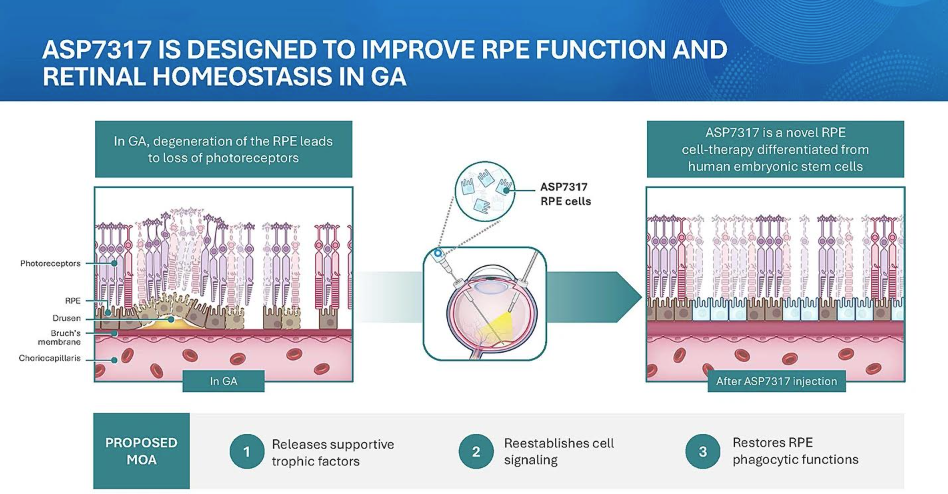
This Phase 3 study evaluates the safety and efficacy of ASP7317 for patients with vision loss from geographic atrophy (GA). ASP7317 is a regenerative medicinal product consisting of specialized human embryonic stem cells intended to improve vision. As opposed to frequent injections, the intervention involves only a single subretinal injection of these cells into the study eye during a surgical procedure.
Active Trials (Closed to enrollment)
ASCENT | AbbVie
A Randomized, Partially Masked, Controlled, Phase 3 Clinical Study to Evaluate the Efficacy and Safety of RGX-314 Gene Therapy in Participants With nAMD.
ARCHER II | Annexon Biosciences
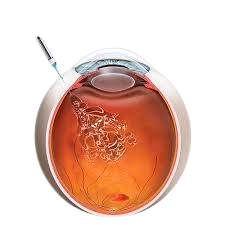
A Phase 3, Multicenter, Randomized, Parallel-Group, Double-Masked, 2-Arm, Sham Controlled Study of the Efficacy, Safety, and Tolerability of ANX007 Administered by Intravitreal Injection in Patients with Geographic Atrophy (GA) Secondary to Age-Related Macular Degeneration (AMD)
This study aims to reduce vision loss in patients with GA and eligible patients may receive monthly IVT injections of ANX007 or sham for 24 months. ANX007 is an antibody antigen-binding fragment that binds to complement factor C1q and fully inhibits activation of the classical complement pathway. Inhibition of C1q has been shown to be neuroprotective in animal models of photoreceptor cell damage, protecting synapses, neurons and retinal function.
SOL | Ocular Therapeutix
A Phase 3, Multicenter, Double-Masked, Randomized, Parallel-Group Study to Evaluate the Efficacy and Safety of Intravitreal OTX-TKI (Axitinib Implant) in Subjects With Neovascular Age-Related Macular Degeneration (nAMD).
THAMES | Genentech
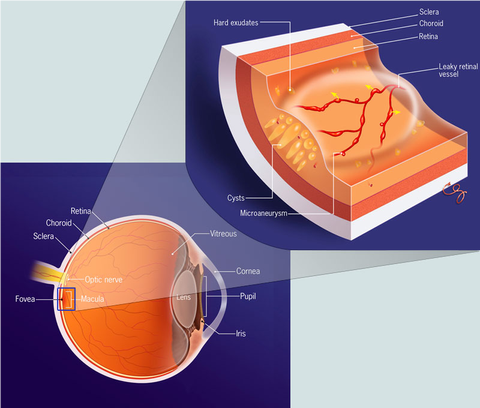
A Phase I/II Study to Evaluate the Safety, Tolerability, Pharmacokinetics, and Efficacy of RO7446603 Administered Alone Or In Combination with Aflibercept Or Faricimab In Patients With Diabetic Macular Edema
RO7446603 is a multivalent Tie2 receptor agonist designed to activate the Tie2 receptor, which is essential for vascular stability and regulation of angiogenesis. By mimicking or enhancing Angiopoietin-1 activity, it promotes vessel stabilization, reducing leakage and abnormal growth seen in conditions like diabetic macular edema (DME). When used in combination with faricimab—a bispecific antibody targeting VEGF-A and Angiopoietin-2—RO7446603 may enhance therapeutic effects through complementary mechanisms, offering improved vascular normalization and more durable treatment outcomes.
Protocol AN | NCT05727891

A Phase 2 Evaluation of Tonabersat for Diabetic Macular Edema (DME).
This study is being done to determine if tonabersat, a pill taken by mouth, can help reduce retinal swelling in patients with diabetic macular edema (DME). To evaluate this, participants will be randomized to take either tonabersat or placebo for 6 months.
DME is a manifestation of diabetic retinopathy and the leading cause of moderate vision loss in patients with diabetes. Without intervention, one third of eyes with center-involved DME experienced “moderate visual loss” (defined as a 15 or more letter score decrease in visual acuity) over a three-year period.
While intravitreal anti-VEGF agents have long been the mainstay of care for DME, this treatment is not without its disadvantages including the need for frequent injections, as well as the risk of complications. Thus, there is an ongoing need to identify novel therapies that are both effective for DME treatment and can reduce risks associated with treatment.
Protocol AO | NCT05904028

Home OCT-Guided Treatment versus Treat and Extend for the Management of Neovascular AMD.
Neovascular or “wet” AMD is an ocular disease characterized by the formation of abnormal blood vessel growth that can damage the structural integrity of the macula, a region of the retina responsible for central vision. The goal of this study is to compare outcomes from two different management approaches for neovascular AMD. We will collect information on both approaches to help doctors determine which management approach works best.
If you take part in the study, you will be placed into one of the following two treatment groups: 1) Anti-VEGF injections based on Treat and Extend monitoring (standard of care treatment) approach, 2) Anti-VEGF injections based on Home OCT-guided monitoring approach.
These groups are referred to as ‘Treat and Extend’ and ‘Home OCT’ respectively. You will know which treatment you are receiving. If you are in the Home OCT group, you will be asked to take daily scans of your eyes using the Home OCT device for two years.
Dry AMD - A decentralized epidemiological study of the progression of Age-related Macular Degeneration (AMD) | Character Bio
AMD has a large genetic component; 34 common genetic variants have been discovered that are associated with AMD. A weighted polygenic risk score can classify an individuals’ total level of genetic risk, and have some power to predict disease progression, in combination with environmental and clinical risk factors. Individuals with high genetic risk but don’t progress to advanced disease may have protective genetic variants. This is an epidemiologic study. There are no risks in participating in this study, as there is no administration of new medications.
Wet AMD - Study of OPT-302 in Combination with Ranibizumab (ShORe) Phase 3 Trial | OPT-302-1004 | Opthea

We are pleased to announce our involvement in a Phase 3 clinical research study offered to select participants with neovascular age-related macular degeneration (AMD). Neovascular or “wet” AMD is an ocular disease characterized by the formation of abnormal blood vessel growth that can damage the structural integrity of the macula, a region of the retina responsible for central vision. The main purpose of this study is to assess the efficacy and safety of an investigational medicine known as OPT-302 when used in conjunction with an FDA-approved medication known as ranibizumab. These medications, known as Anti-VEGF therapy, inhibit the proteins responsible for the development of new abnormal vessel growth and subsequent leakage typically found in Wet AMD.
Completed Trials
Diamond | Oculis
DIAMOND 2 is a clinical study researching a new way to treat Diabetic Macular Edema (DME), a condition where fluid builds up in the retina due to diabetes and causes vision loss. The study is testing an experimental eye drop called OCS-01. While many current treatments for this condition require injections into the eye or laser procedures, OCS-01 is designed to reach the back of the eye through a simple eye drop.